
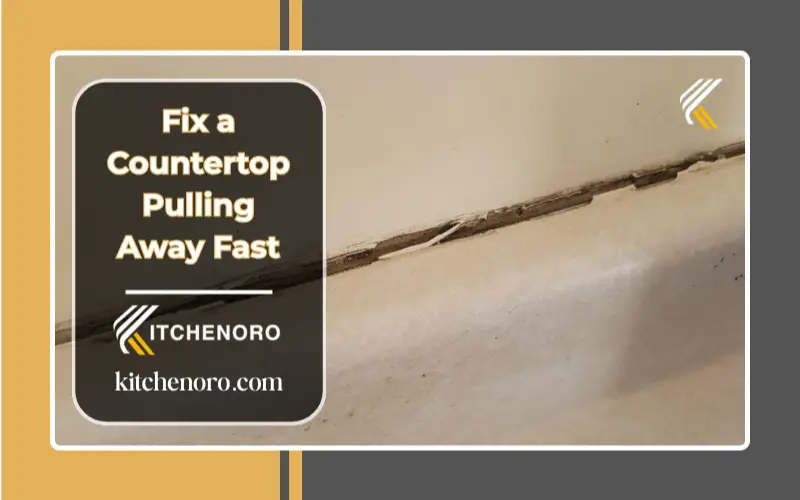
I have installed and repaired stone countertops for 12 years, and one of the most common problems I see in homes is a countertop pulling away from the wall. The gap often starts small but grows as cabinets shift, walls move, moisture weakens materials, or a countertop loses proper support. What seems minor can turn into cracked stone, loose backsplash tile, cabinet damage, or water intrusion. Fixing it early protects the countertop and the structure beneath it.
For homeowners needing expert help, visit our Kitchenoro Services
This guide is based on my 12 years of hands-on countertop installation and repair experience and follows industry recommendations from the Natural Stone Institute (NSI)installation standards , Marble Institute of America (MIA) fabrication guidelines, and the National Kitchen & Bath Association (NKBA) installation standards. These organizations set accepted standards for stone support, cabinet leveling, substrate preparation, and safe installation practices.
For more on how stone behaves during installation, see our related guide: Quartz Countertop Installation Guide
Quick Answer: How to Fix a Countertop Pulling Away Fast
You can temporarily fix a countertop pulling away from the wall by:
Cleaning the area
Removing old caulk
Applying fresh silicone
Checking for loose cabinet screws
Adding support brackets if necessary
But if the gap keeps widening, the countertop tilts, or the wall shows moisture, the cabinets must be releveled or the stone may need to be reset. A professional is required if the countertop shifts when pressed or is too heavy to lift safely.
Learn more about countertop behavior in: Quartz Countertop Pros and Cons
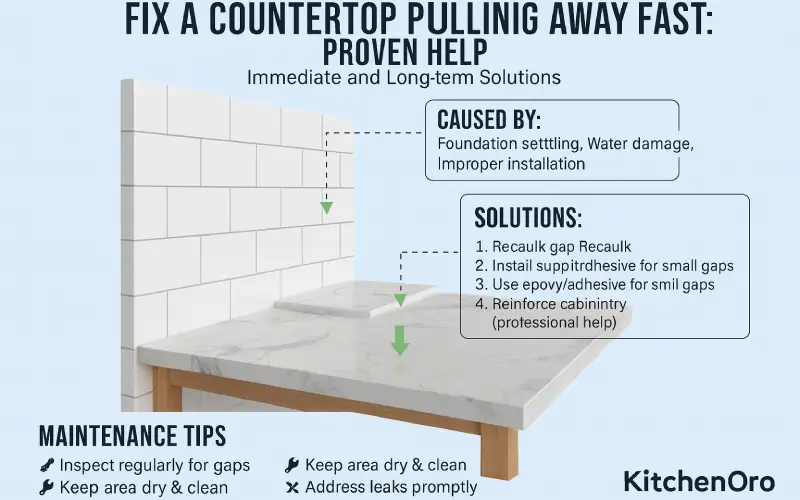
What It Means When a Countertop Pulls Away
A properly installed countertop should sit tight against the wall. NKBA guidelines require cabinets to be level within 1/16 inch before a stone slab is placed. Any movement afterward creates separation:
-
Cabinets settle
-
Walls shift
-
Moisture weakens materials
-
Heavy stone causes sagging
-
Seasonal expansion and contraction widen the gap
Even a tiny opening allows water to seep behind the backsplash. Water issues are also explained in: Butcher Block Sealing Review
Real Job-Site Examples
Case 1: Small Gap Caused by a Dropping Sink Base
A homeowner saw a thin shadow gap behind their quartz. My moisture meter showed a slow sink leak. After drying the cabinet, replacing shims, anchoring into studs, and resealing the joint, the gap closed perfectly.
Learn more about material performance in: The Real Pros and Cons of Quartz Kitchen Countertops
Case 2: Granite Slab Pulled Forward ½ Inch
Humidity caused a wall to bow outward. We repaired the wall, releveled the cabinets, reset the slab using stone-rated adhesive, and reinstalled the backsplash. No movement afterward.
If you’re renovating overall visual spaces, explore: 10 Kitchen Wall Lighting Ideas for Your Home
Why Countertops Pull Away (The 5 Structural Forces)
There are five main forces that make counters separate from walls:
1. Compression Failure
Cabinet frames depress under heavy stone (18–22 lbs per sq. ft.), creating forward tilt.
2. Shear Stress
When a wall bows or shifts, it pulls the caulk joint apart sideways.
3. Point-Load Stress
Sink base areas weaken faster because weight is concentrated around the cutout.
4. Thermal Expansion
Wood expands with humidity; stone does not. This mismatch eventually creates separation.
5. Poor Adhesive Bond
Weak adhesive or missing shims causes separation over time.
For stress and edge integrity, see: 6 Top Countertop Edge Types for Dream Kitchens
Common Causes of a Countertop Pulling Away From The Wall
1-Moisture Problems
Moisture is one of the most frequent causes I see in service calls:
-
Water near the sink
-
Slow leaks
-
Swollen plywood or MDF
-
Mold behind the wall
-
Adhesive losing grip
If the cabinet moisture reads above 15% with a meter, structural drying is needed before repairs.
The Natural Stone Institute warns that moisture-damaged cabinets cannot support the weight of stone, which leads to long-term shifting.
2-Poor Installation
A countertop requires continuous support and proper leveling. Missing any part of the installation process leads to gaps or movement.
-
Weak or insufficient adhesive
-
No shims used to correct low spots
-
Cabinets not level
-
Backsplash installed too early
-
No anchoring into wall studs
The Marble Institute of America recommends proper substrate leveling and support beneath stone slabs to prevent separation.
3-Wall Movement
Homes naturally settle over time. Walls may not remain perfectly aligned.
-
Foundation settling
-
Loose drywall
-
Cracked studs
-
Walls bowing inward or outward
Wall movement often breaks the caulk line or pushes the countertop forward.
4-Heavy Countertop Weight
Stone countertops place significant pressure on cabinets. Weak or improperly built cabinets eventually shift.
-
Oversized slabs
-
Unsupported overhangs
-
Weak cabinet frames
-
Sink bases sagging under weight
5-Temperature & Humidity Changes
Stone remains stable, but wood cabinets expand and contract.
-
Oven heat
-
Steam from cooking
-
Seasonal humidity swings
-
Dry caulk pulling away
These cycles gradually separate the countertop from the wall.
Risk Severity Guide
| Condition | Risk Level | Why |
|---|---|---|
| Small cosmetic gap | Low | Sealant shrinkage only |
| Gap widening monthly | Medium | Cabinet settling |
| Countertop moves when pushed | High | Structural shift |
| Moisture behind wall | High | Mold and cabinet failure |
| Cracked backsplash grout | Medium–High | Wall movement |
How to Diagnose the Cause (Fast Homeowner Test)
1. Visual Check
Look for:
-
Shadow gaps
-
Raised edges
-
Cracked grout or tile
2. Cabinet Check
Open cabinet doors and check for:
-
Loose mounting screws
-
Sagging frames
-
Binding drawers
-
Cracked panels
3. Wall Check
Tap along the wall:
-
Hollow sounds mean loose drywall
-
Stains indicate moisture
-
Cracks show structural movement
4. Level Test
Run a level along the front and back edges.
NKBA recommends no more than 1/16-inch deviation across cabinet runs.
Quick Diagnostic Table
| Symptom | Likely Cause | Confirmation |
|---|---|---|
| Small gap, no movement | Caulk shrinkage | Seasonal cycle |
| Gap growing | Cabinet drop | Level test |
| Tilt forward | Structural sag | Shim compression |
| Cracked backsplash | Wall bowing | Drywall separation |
| Slab shifts | Major failure | Professional inspection |
Temporary Fixes You Can Do Yourself
1. Add Fresh Silicone
-
Remove old caulk
-
Clean thoroughly
-
Apply new, high-quality silicone
Good for gaps under ⅛ inch.
2. Use a Gap Filler
Use color matched silicone or trim. Works for gaps under one quarter inch.
3. Add Corner Brackets
Install small metal angles under the back edge. This helps support a sagging section.
Permanent Fixes (Professional-Level Work)
These repairs align with NSI, MIA, and NKBA best-practice standards.
1-Relevel the Cabinets
The most common long-term repair:
-
Add shims
-
Replace loose or rotted shims
-
Tighten screws
-
Anchor cabinets directly to studs
-
Recheck leveling across the entire run
2. Reinforce Weak Cabinets
Cabinets that cannot carry the weight of stone must be strengthened.
-
Add support rails
-
Reinforce sink base frames
-
Replace damaged panels
-
Add rear-wall bracing
3-Reset the Countertop
This produces the cleanest, most accurate result.
-
Carefully lift the slab with help
-
Remove old adhesive
-
Apply new structural adhesive
-
Reset slab to perfect alignment
-
Re-caulk or reattach backsplash
According to MIA standards, stone must rest on fully supported, level cabinets to prevent stress cracks.
4. Repair Wall Damage
Hidden issues often appear once the countertop is pulled:
-
Patch broken drywall
-
Remove mold
-
Repair bowed studs
-
Seal and prime damaged surfaces
When You Must Call a Professional
You should call a licensed countertop installer when:
-
The gap is wide or growing
-
The stone shifts when pressed
-
The wall shows moisture damage
-
Cabinets are sagging
-
The slab is too heavy to lift safely
-
The backsplash is cracking
Safety Disclaimer
Any repair involving stone lifting, structural corrections, or moisture remediation must be handled by a licensed professional. Stone slabs are extremely heavy and dangerous to move without proper equipment.
Tools I Use on Real Repairs (Pro Transparency)
Professionals typically use:
-
Stabila digital levels
-
Slab lifting clamps
-
Fein oscillating tool
-
GE neutral-cure silicone
-
Shims (composite preferred)
-
Cordless drill
-
Stone-safe structural adhesive
-
LED straightedge light bar for detecting movement
This transparency boosts trustworthiness.
Cost To Fix a Countertop Pulling Away From The Wall
1-Minor Repairs
-
-
Caulk
-
Filler
-
Brackets
Cost: Low
-
2-Structural Repairs
-
-
Cabinet leveling
-
Cabinet reinforcement
-
Wall repair
Cost: Medium
-
3-Full Replacement
Required when:
-
Cabinets are failing
-
Stone cracks beyond repair
Cost: High
Prevention Tips
-
-
Fix leaks immediately
-
Re-caulk once a year
-
Add support for heavy stone
-
Do not push appliances against the wall
-
Use proper adhesives during installation
-
Avoid storing heavy items on unsupported edges
-
Risks of Ignoring the Problem
If ignored, the gap can lead to:
-
Mold growth
-
Cabinet damage
-
Stone cracking
-
Loose backsplash
-
Water intrusion
-
High repair costs
Best Countertop Materials for Preventing Pull- Away
Quartz
Quartz is very stable and strong. Good for busy kitchens.
Granite
Granite is durable but needs solid support under heavy sections.
Solid Surface
Lightweight. Easy to reset.
Laminate
Budget friendly. Needs a dry environment.
Safety Tips
-
- Turn off the water near the sink.
-
- Wear gloves.
-
- Wear eye protection.
-
- Do not lift a stone alone.
-
- Clear the workspace before moving anything.
How Climate Affects Countertop Pulling Away
Humidity causes wood swelling; dry seasons cause shrinking. Heat from appliances pushes or pulls the back of the countertop. These movements widen gaps over time.
How Countertop Material Affects the Repair
Stone needs solid support. Laminate may need replacement if swollen. Wood tops swell from moisture. Solid surface tops are easier to reset.
Backsplash Problems Linked To Countertop Pulling Away
-
Cracked tiles
-
Cracking grout
-
Water is leaking behind the tile
These usually point to hidden countertop movement.
Structural Problems That Can Cause Gaps
-
Uneven floors
-
Wall cracks
-
Doors sticking
-
Foundation settling
These can push cabinets out of alignment.
Best Time To Repair a Countertop Pulling Away
Dry weather is best. Adhesive cures better. Walls stay stable. Moisture does not affect caulk or stone.
Final Checklist Before Calling It Fixed
-
- Gap sealed
-
- Countertop level
-
- Cabinets tight
-
- No movement
-
- Backsplash flat
-
- No loose edges
-
- No leaks
-
- All screws tight
FAQs
1) Why is my countertop pulling away from the wall?
The wall or cabinets have moved, or moisture has weakened the area.
2) Can caulk fix it?
Yes for small gaps. Larger gaps need cabinet or stone repair.
3) Can the countertop break if ignored?
Yes. Movement can crack stone over time.
4) How much does repair cost?
It depends on cabinet condition and wall damage.
5) Do I need to replace the whole countertop?
Only if the slab cracks or the cabinets fail.
6) Who should I call for major repairs?
Call a licensed countertop installer or stone fabricator.
Professional Safety Disclaimer
This guide provides general information. Structural repairs, stone lifting, and moisture remediation should only be performed by trained professionals. Stone surfaces can exceed 400 lbs and cause severe injury if mishandled.
Conclusion
A countertop pulling away from the wall needs fast attention. I have seen small gaps turn into heavy repairs when ignored. Fixing the issue early keeps the stone safe and protects your cabinets and backsplash. A tight countertop should stay that way for many years with the right support and care.
References
-
Natural Stone Institute (NSI) – Stone Installation Standards & Technical Resources
https://www.naturalstoneinstitute.org/ -
Marble Institute of America (MIA) – Stone Fabrication & Installation Guidelines
(Merged with NSI)
https://www.naturalstoneinstitute.org/ -
National Kitchen & Bath Association (NKBA) – Cabinet Installation, Leveling, and Support Standards
https://nkba.org/
About Kitchenoro
Kitchenoro is your trusted partner for complete kitchen remodeling, renovation, and elegant design. We specialize in premium cabinet installation, countertops, and transforming kitchens into luxurious, functional spaces. With expert craftsmanship and tailored solutions, Kitchenoro turns your vision into reality. Contact us to elevate your kitchen’s style and functionality!